
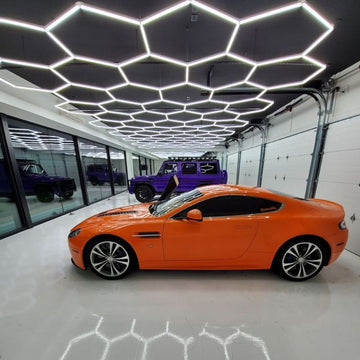






Hexagonal LED lights are highly energy efficient, delivering up to about 120 lumens per watt and cutting lighting costs by as much as 80% versus traditional bulbs. With energy prices high and sustainability top of mind, that efficiency is a major reason hex lights suit homes, offices, gyms, and garages. Here is what makes them efficient, how much you can save, and how to get the most out of them.
Key takeaways
- Hexagonal LED lights deliver around 120 lumens per watt, far more than incandescent or fluorescent bulbs.
- Switching to LED can cut lighting energy costs by up to 80%, plus fewer replacements.
- Modular layouts, dimming, and smart controls let you avoid over-lighting and trim usage further.
- Color temperature does not change energy use, only wattage and efficiency (lumens per watt) do.
What makes LED lighting energy efficient?
LED (light-emitting diode) technology converts far more of its electricity into light than incandescent or fluorescent options, which waste much of their energy as heat. LEDs use less power while producing the same or greater brightness. Hexagonal LED lights are efficient performers, offering around 120 lumens per watt, which is what makes them a strong choice for anyone trying to lower energy use without sacrificing light.
Benefits of energy-efficient hexagonal lights
Efficiency pays off in three clear ways:
- Lower energy bills: less electricity per unit of light means lower running costs over time, which matters most where lights run for long hours.
- Longer lifespan: LEDs last far longer than traditional bulbs, cutting replacement and maintenance costs, a real advantage for high ceilings and commercial spaces.
- Eco-friendly: using less energy means lower carbon emissions, so you shrink your footprint while keeping high-quality light.
How hexagonal LED lights optimize energy usage
Beyond the efficient LEDs themselves, the format helps you avoid waste:
- Customizable layouts: hex lights are modular, so you install exactly the number you need and avoid over-illumination.
- Dimmable options: some systems dim, letting you drop brightness (and power draw) for ambient use in workspaces or entertainment areas.
- Smart controls: pairing with smart systems enables scheduling, so lights are not running when no one needs them.
Hexagonal LED vs. traditional lighting
Traditional incandescent and fluorescent bulbs burn significantly more energy for the same light. Hexagonal LED lights use a fraction of that, saving up to 80% on lighting costs. LEDs cost more upfront but pay for themselves through energy savings and fewer replacements, so businesses and homeowners see a positive return on investment. If you are weighing fixture types, see why you should switch to LED lighting.
Energy efficiency across different spaces
The savings show up wherever lights run hard or long:
- Home gyms and garages: bright, long-lasting light with lower electricity use. See best gym lighting design.
- Offices and commercial spaces: big wins when lights run for extended hours, and good light supports productivity. See hexagonal lights for a home office.
- Showrooms and retail: the brightness products need, with meaningful cost savings over time.
How to maximize energy savings
Get the most from your setup with a few habits:
- Install for the space: place fixtures where light is actually needed to avoid waste.
- Use sensors and timers: daylight sensors and timers adjust output to natural light and occupancy automatically.
- Pick the right color temperature: a cool 5000K–6500K works for workspaces. Note that color temperature does not affect energy use, only wattage and efficiency do. See the color temperature guide.
Conclusion
Hexagonal LED lights are an efficient, future-friendly choice for homes, offices, gyms, and garages. They cut energy costs, last far longer than traditional bulbs, and support a lower carbon footprint, all while delivering bright, even light. Plan the layout, add controls where it helps, and the savings compound year after year.

