




Good gym lighting should make equipment, walkways and body position easy to see without producing distracting glare or deep shadows. For most home, garage and commercial fitness spaces, the best starting point is bright, evenly distributed white LED lighting, with separate dimming or accent lighting added only where it supports the activity.
This guide explains practical brightness targets, color temperature, CRI, fixture placement and layout planning for weight rooms, cardio areas, studios and home gyms. The figures below are starting points rather than a substitute for a site-specific lighting plan, because ceiling height, wall color, fixture output and room geometry all affect the light that reaches the workout surface.
Quick Gym Lighting Recommendations
| Design factor | Practical starting point |
|---|---|
| General training brightness | 300–500 lux at the workout surface |
| Free weights and machines | 400–500 lux with good uniformity |
| Yoga and recovery | 200–300 lux with dimming |
| Color temperature | 4000K for balanced comfort; 5000K for a crisp, energetic appearance |
| Color rendering | CRI 80 minimum; CRI 90+ for mirrors, filming and premium studios |
| Main lighting | Even white LED ceiling lighting |
| Accent lighting | RGB lighting or neon signs on separate controls |
Lux measures how much light reaches a surface. One lux equals one lumen per square metre. In US units, 300–500 lux is approximately 28–46 foot-candles. Measure at bench, floor or equipment height—not directly at the fixture.
How Bright Should Gym Lighting Be?
A gym needs enough light for safe movement and clear visibility, but brightness alone does not create a good result. Uniformity matters just as much. A few very bright fixtures surrounded by dim areas can cause eye strain and make racks, cables and floor transitions harder to see.
| Gym area | Starting target | Primary concern |
|---|---|---|
| Yoga, stretching and recovery | 200–300 lux | Comfort, dimming and a calm atmosphere |
| General fitness and cardio | 300–500 lux | Even coverage and clear circulation paths |
| Free weights and resistance machines | 400–500 lux | Visibility around benches, plates, cables and moving parts |
| Personal training or group instruction | 400–500 lux | Clear facial and body visibility across the room |
| Fitness filming and photography | 500 lux or more | Vertical illumination, high CRI and controlled shadows |
Final requirements vary with the facility, activity and applicable building or safety rules. Commercial gyms should have a qualified designer or electrical professional confirm lighting levels, emergency illumination and egress requirements.
Using Lumens as a Preliminary Estimate
Lumens describe the total light produced by a fixture; lux describes the light reaching the room. To make an early estimate, multiply the room area in square metres by the target lux. Then account for light lost because of ceiling height, spacing, reflectance and fixture distribution.
For example, a 200 sq. ft. home gym is about 18.6 m². At a target of 400 lux, the workout plane needs roughly 7,440 lumens. The installed fixture output will need to be higher because not every lumen reaches the target surface. Treat this as a planning estimate, then verify the finished space with a lux meter.
Best Color Temperature and CRI for a Gym
Color temperature changes the appearance and atmosphere of the room. It does not indicate brightness.

- 3000K–3500K: Warm and relaxed. Best reserved for yoga, stretching, recovery and lounge areas.
- 4000K: Neutral white with good visual comfort. A versatile choice for multipurpose gyms and studios.
- 5000K: Crisp, cool white. Popular for weight rooms, garage gyms and high-energy training areas.
- 6000K–6500K: A distinctly cool, daylight-like appearance. Use when that visual style is intentional rather than as the default for every gym.
Color Rendering Index, or CRI, describes how naturally colors appear under a light source. CRI 80 is a practical minimum for general training. Choose CRI 90 or higher when the space has large mirrors, is used for fitness content, or requires accurate skin, clothing and equipment colors. High CRI is especially valuable in premium studios and personal-training facilities.
Gym Lighting Layout and Fixture Placement
Plan the lighting after mapping racks, benches, cardio equipment, mirrors, doors and open training zones. The goal is continuous coverage without placing a harsh point source directly in a user’s normal line of sight.
- Light activity zones, not just the centre of the room: Cover racks, benches, dumbbell areas and circulation paths.
- Avoid a single fixture behind the user at a mirror: It can leave the face and front of the body in shadow. Use broad overhead coverage and, when needed, controlled light from the front or sides.
- Keep glare away from horizontal benches: Someone looking upward should not face an unshielded, concentrated source.
- Use multiple zones: Separate workout, recovery, reception and accent lighting so each can be adjusted independently.
- Plan for ceiling height: Higher mounting generally requires more output or a different fixture distribution to maintain the same illuminance below.
- Check uniformity: Measure several points across the room after installation. Correct dark corners rather than judging the result from directly below one fixture.
Surface-Mounted vs. Suspended Lighting
Surface mounting keeps fixtures close to a low or standard-height ceiling and preserves headroom. Suspended installation can bring light closer to the activity plane in high-ceiling spaces, but suspension height must be coordinated with exercise equipment, ball activities and required clearances. Hexagara’s modular systems are made from interconnected LED light tubes and connectors—not solid LED panels—and available mounting methods vary by model. Always check the product instructions before planning the ceiling.
Best Lighting by Gym Type
Home Gym
A home gym usually benefits from one evenly spaced white-light system over the active zone. In a compact room, avoid overfilling the ceiling with fixtures that produce more light than you can comfortably use. Dimming is useful when the same room supports strength training, stretching and everyday household use.
Garage Gym
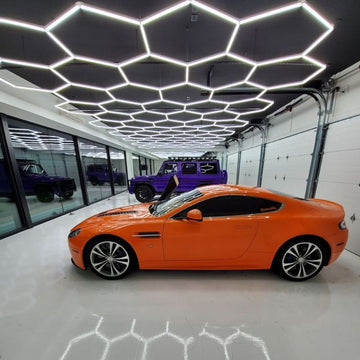
Garage gyms often have dark ceilings, limited daylight and reflective metal equipment. Use broad overhead coverage, check for shadows around an open garage door and choose products appropriate for the temperature, dust and moisture conditions of the space. A modular grid from the gym lighting collection can create even coverage while giving the garage a purpose-built appearance.
Commercial Fitness Centre

Divide a commercial gym into lighting zones. Free weights, machines, cardio, studios, reception and circulation areas do not necessarily need the same brightness or controls. Coordinate the main lighting with emergency and exit lighting, occupancy controls, local codes and maintenance access. A professional photometric plan is worthwhile for large facilities.
Boutique Studio or Content Gym
Use high-CRI white light as the functional base, then add separately controlled color or signage. This allows the room to remain safe and usable while creating a different atmosphere for classes, filming or branded content.
Are Hexagon LED Lights Good for Gyms?
Hexagon LED lights work well in gyms when their output, dimensions and layout suit the room. Interconnected light tubes distribute light across a broad ceiling area while the geometric pattern creates a distinctive visual feature. They are especially popular in garage gyms, bodybuilding rooms and studios where the ceiling appears in photos or videos.
Choose the system by actual dimensions and output rather than by the number of hexagons alone. Confirm that the grid fits around doors, HVAC equipment, sprinklers and ceiling obstructions. For larger layouts, browse hexagonal and honeycomb lights. If you need adjustable output, compare dimmable hexagon lights.
White LED Lighting vs. RGB Gym Lighting
White and RGB lighting serve different purposes. White LED lighting should normally provide the functional illumination needed to train, clean and move safely. RGB hexagon lighting is better used for atmosphere, brand colors, class effects and content creation.
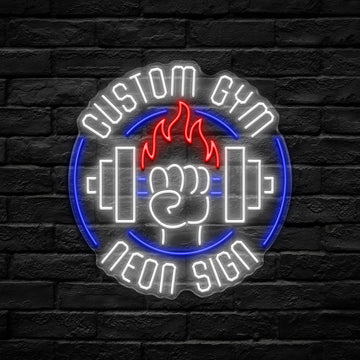
Do not rely on saturated RGB colors as the only light in an active workout area. They can distort color perception and reduce visual clarity. Put RGB fixtures on separate controls so users can return the room to bright white task lighting whenever required. A gym neon sign can add a branded focal point without replacing the main ceiling lighting.
Worked Example: Lighting a 200 sq. ft. Home Gym
Consider a 10 × 20 ft. room with an 8–9 ft. ceiling, a power rack at one end, a mirror on the long wall and open floor space in the centre.

- Set the target: Start around 400 lux for general strength and conditioning.
- Estimate the light: The room is approximately 18.6 m², so 18.6 × 400 gives 7,440 lumens reaching the workout plane. Specify more fixture output to account for real-world losses.
- Map the equipment: Keep consistent overhead coverage above the rack and open floor, while avoiding a concentrated source directly above the lifter’s face on the bench.
- Choose the appearance: Use 4000K for balanced comfort or 5000K for a cooler garage-gym look. Select CRI 90+ if the mirror and camera use are important.
- Add controls: Put the main white lights on a dimmer when compatible. Control decorative RGB or wall lighting separately.
- Verify after installation: Measure several locations at floor and equipment height. Adjust spacing or output if corners and equipment faces remain noticeably darker.
This process is more reliable than selecting a fixture only from room area, because it includes activity, placement and the light that actually reaches the space.
Common Gym Lighting Mistakes
- Choosing by watts alone: Wattage measures energy use, not usable brightness. Compare lumens, distribution and efficiency.
- Using only one very bright fixture: This often creates glare and uneven coverage.
- Ignoring mirrors: Poor placement can produce backlighting, reflections and heavy facial shadows.
- Treating RGB as task lighting: Color effects should supplement dependable white illumination.
- Forgetting ceiling obstructions: Measure around doors, ductwork, fans, sprinklers and storage before ordering.
- Skipping dimming and zoning: One setting rarely suits lifting, yoga, cleaning and filming equally well.
- Making payback claims without calculation: LED savings depend on operating hours, electricity rates, existing equipment and installation cost.
Gym Lighting Installation and Safety
Confirm voltage, circuit capacity, mounting method, dimmer compatibility and environmental rating before installation. Electrical work should follow the manufacturer’s instructions and applicable electrical and building codes. Commercial facilities must also account for emergency lighting, illuminated exits and safe egress independently from decorative gym lighting.
Do not block sprinklers, detectors, ventilation or access panels with a ceiling grid. In spaces used for ball sports or explosive overhead movements, consider impact risk and fixture protection. If the room is damp, dusty, unusually hot or cold, verify that the selected lighting is rated for those conditions.
Frequently Asked Questions
What brightness is best for a gym?
A useful starting point is 300–500 lux for general training, with 400–500 lux in free-weight and machine areas. Yoga and recovery zones can often use 200–300 lux with dimming. Verify the completed installation at the workout surface.
What color temperature is best for gym lighting?
4000K suits multipurpose spaces and provides balanced visual comfort. 5000K creates a cooler, more energetic appearance for weight rooms and garage gyms. Warmer 3000K–3500K light works well in recovery and yoga areas.
Are hexagonal LED lights good for gyms?
Yes, when the system’s dimensions and output match the room. Hexagonal systems use interconnected LED light tubes and connectors to create broad, modular ceiling grids with a modern visual pattern.
How do I reduce glare and shadows?
Use several evenly spaced light sources instead of a few intense points. Coordinate placement with benches, mirrors and equipment, avoid concentrated sources in normal sightlines, and check multiple areas with a lux meter.
Is CRI important in a gym?
CRI 80 is suitable for general use, while CRI 90+ is preferable for mirrored rooms, personal-training studios and fitness photography or video because it renders skin and colors more naturally.
Can RGB lights be the main gym lighting?
Bright white LED lighting is usually the better functional base. Use RGB lighting on separate controls for atmosphere, branding and content while retaining adequate white illumination for training and cleaning.
Plan Your Gym Lighting
Start with the room dimensions, ceiling height, equipment plan and target light level. Then compare fixture output, grid dimensions, color temperature, CRI and control options. Explore Hexagara gym lighting for modular white-light layouts, or contact us when you need help matching a system to your space.

