






Hexagonal lights come in three main types: standard, dimmable, and RGB. Standard hex lights give fixed, reliable brightness, dimmable ones let you adjust the intensity, and RGB models add color-changing effects. The right choice comes down to how you use the room, whether you need steady task light, flexible brightness, or creative color. Here is how each type works and where it fits best.
Key takeaways
- Standard hex lights have fixed brightness and are the simplest, most affordable option for task and work areas.
- Dimmable hex lights adjust intensity, ideal for multi-use rooms and saving energy at lower levels.
- RGB hex lights change color and run dynamic effects, great for gaming rooms, gyms, and retail.
- Match the type to the room: standard for garages and workshops, dimmable for flexible spaces, RGB for accent and atmosphere.
New to hex lighting? Start with our overview of what hexagonal lights are, then use this guide to pick a type.
Standard hexagonal lights
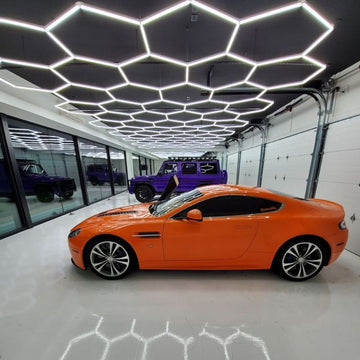
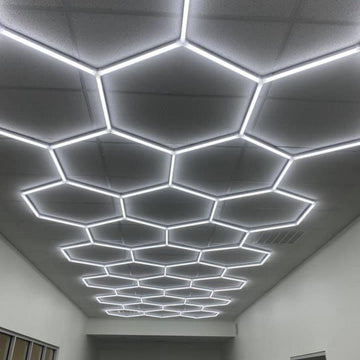
Standard hexagonal lights are the most traditional option: they deliver consistent, fixed brightness with no controls to manage. They use energy-efficient LED technology in a clean, minimalist geometric design, and they are usually the most affordable choice. Because the output is steady and dependable, they suit functional areas where you just want reliable, even light, such as garages, workshops, and warehouses.
Dimmable hexagonal lights
Dimmable hexagonal lights let you adjust brightness to match the moment, which makes them a strong fit for rooms that serve more than one purpose. Turn them up for detailed work and down for a relaxed setting, and you save energy whenever you run them below full output. They typically need a compatible dimmer or controller, so check compatibility before buying. For a home office or a studio that doubles as a lounge, the flexibility is worth it.
RGB hexagonal lights
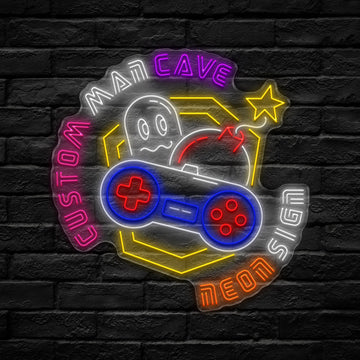
RGB hexagonal lights add color on top of light. You can switch between colors, apply dynamic scenes and effects, and set a specific mood, usually through a remote or app. Many RGB sets also include a white mode (often labeled RGBW) so they can still do everyday lighting. They shine in entertainment and recreational spaces, gaming rooms, gyms, and retail displays where dynamic color makes the space stand out.
Standard vs dimmable vs RGB
Here is a quick comparison to match each type to your needs.
| Type | Brightness control | Color | Best for |
|---|---|---|---|
| Standard | Fixed | Single white | Garages, workshops, warehouses |
| Dimmable | Adjustable | Single white | Offices, studios, multi-use rooms |
| RGB / RGBW | Often adjustable | Full color + effects | Gaming rooms, gyms, retail, accent walls |
How to choose the right type
Pick based on how the room is used:
- Need reliable task light? Choose standard for the simplest, most cost-effective setup.
- Room used for different activities? Choose dimmable so you can tune brightness and save energy.
- Want atmosphere or branding? Choose RGB for color scenes and effects, ideally RGBW so you keep a clean white mode.
- Still deciding on the white tone? See the color temperature guide to match warm or cool light to the space.
Conclusion
Standard, dimmable, and RGB hexagonal lights each fit a different need: steady brightness, adjustable intensity, or vibrant color. Once you know how a room is used, the right type is usually obvious, and you can mix types across a home or business. Whatever you choose, the modular hex format gives you even, modern light that scales with your space.

